How Asset Finance Works for Self Employed Tradies
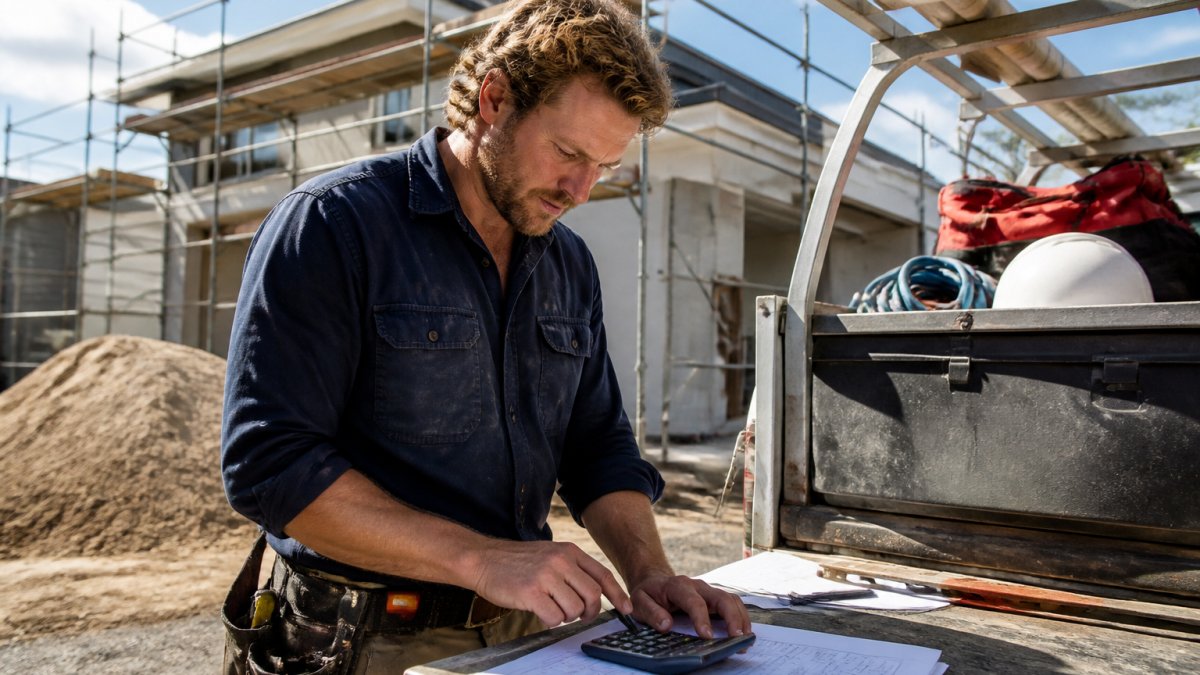
Asset finance for self employed tradies is a lending arrangement where the equipment or vehicle itself secures the money, so approval leans on the asset’s value and your business’s cash flow rather than a salary slip. At Outlook Finance, we arrange this funding for sole traders and ABN holders whose income rarely fits a bank’s standard template.
The structure is straightforward. A lender buys the asset, you repay it over an agreed term, and you own it outright or hand it back depending on the product you choose. The Australian Securities and Investments Commission regulates credit providers and brokers, and its Moneysmart guidance on business loans is a useful starting point for understanding your rights before you sign.
Related — Outlook Finance Services
Three things decide your outcome:
- The asset: age, type and resale value
- Your trading history: ABN age, BAS lodgements, bank statements
- The structure: chattel mortgage, hire purchase or lease
Most tradies assume the lender cares most about their tax return. In practice, the asset and the bank statements carry more weight.
Loan Types Compared: Chattel Mortgage, Hire Purchase, Finance Lease and Operating Lease
Four structures cover almost every tradie deal, but they are not interchangeable.
Chattel mortgage. The lender takes security over the asset but you are recorded as the owner from settlement.
Hire purchase. Similar cash-flow profile to a chattel mortgage, but the lender retains title until the final payment (including any balloon) is made.
Finance lease. The lender owns the asset and you lease it for an agreed term. GST is spread across each repayment rather than claimed upfront, and the asset sits on the lender’s books.
Operating lease. A shorter-term arrangement where the lender carries the residual risk and you return the asset at the end. GST is charged on each payment.
| Structure | Who Owns the Asset | GST Treatment | Residual / Balloon | Best For |
|---|---|---|---|---|
| Chattel mortgage | You, from day one | Claim GST upfront | Optional balloon | Business-use assets you want to own |
| Hire purchase | Lender until final payment | Claim GST upfront | Optional balloon | Buyers who want ownership at the end |
| Finance lease | Lender | GST spread across repayments | Set residual at start | Mixed business and private use |
| Operating lease | Lender | GST on each payment | Lender carries residual risk | Short-term or fast-depreciating gear |
The tax treatment is where these products genuinely diverge, and it is worth a conversation with your accountant before you commit. The Australian Taxation Office sets the rules on deductibility, and the ATO guidance on business asset depreciation explains how the small business concessions interact with each structure.
Choosing a lease when you should have taken a chattel mortgage can cost you the GST credit and complicate your depreciation schedule. Get the structure right before the paperwork starts, because switching later means refinancing.
Asset Finance Eligibility Requirements for Sole Traders and ABN Holders
Asset finance eligibility requirements for sole traders are less rigid than most people expect. Lenders want to see an active ABN, evidence of trading, a deposit in many cases, and bank statements that show money moving through the business. A clean credit file helps, but a thin one is not automatically fatal.
What actually gets assessed:
- ABN registration and how long you have held it
- Recent BAS lodgements or accountant’s letter
- Three to six months of bank statements
- Deposit or trade-in equity
- Credit history, including any defaults
Newer businesses face tighter criteria, but “new” is not a wall. A sole trader with a short ABN history and solid deposits can often still get approved through the right lender. Established businesses with two years of trading typically see more competitive rates and higher borrowing limits.
Lenders weight the deposit and the asset’s resale value heavily for short-ABN applicants. A larger deposit does more for your approval odds than a longer trading history in many cases.
Low Doc Asset Finance When Tax Returns Don’t Tell the Full Story
Low doc asset finance is a lending pathway that assesses your income through bank statements, BAS lodgements or an accountant’s declaration instead of full tax returns. It exists because tradies legitimately claim deductions that shrink their taxable income while their cash flow stays strong.
This is the gap where most bank declines happen. A tax return showing a modest profit after deductions tells a lender very little about whether you can service a repayment. Bank statements tell the real story.
Outlook Finance specialises in exactly this scenario, including low doc options from one year of ABN. If a major lender has already knocked you back because your return showed a loss after deductions, that is a documentation problem, not a business problem.
What low doc lenders typically accept:
- Six months of business bank statements
- BAS statements showing turnover
- An accountant’s letter confirming income
- A declaration of financial position
Expect a slightly higher rate than a full doc loan. The trade-off is speed and access.
Sole Trader Equipment Finance: Tools, Machinery and Specialist Gear
Sole trader equipment finance covers everything from a few thousand dollars of trade tools to six-figure specialist machinery. Lenders will fund new and used gear, and many will consider private-sale purchases with an inspection.
What gets funded regularly:
- Trade tools and toolkits
- Earthmoving and excavation equipment
- Scaffolding and access equipment
- Workshop machinery and diagnostic gear
- Kitchen and hospitality equipment
- Medical and allied health equipment
The practical constraint is the asset’s age and resale value. Very old or highly specialised machinery is harder to fund because the lender has less certainty about recovering its money. Equipment with a clear second-hand market is easier.
For specialist gear with a narrow resale market, expect a larger deposit and a shorter term. The lender is pricing the exit risk, not doubting your business.
Business Vehicle Finance for Utes, Vans and Trucks
Business vehicle finance funds the ute, van or truck your work depends on, using the vehicle as security. New vehicles are straightforward. Used vehicles, private sales and commercial trucks each carry their own lending quirks.
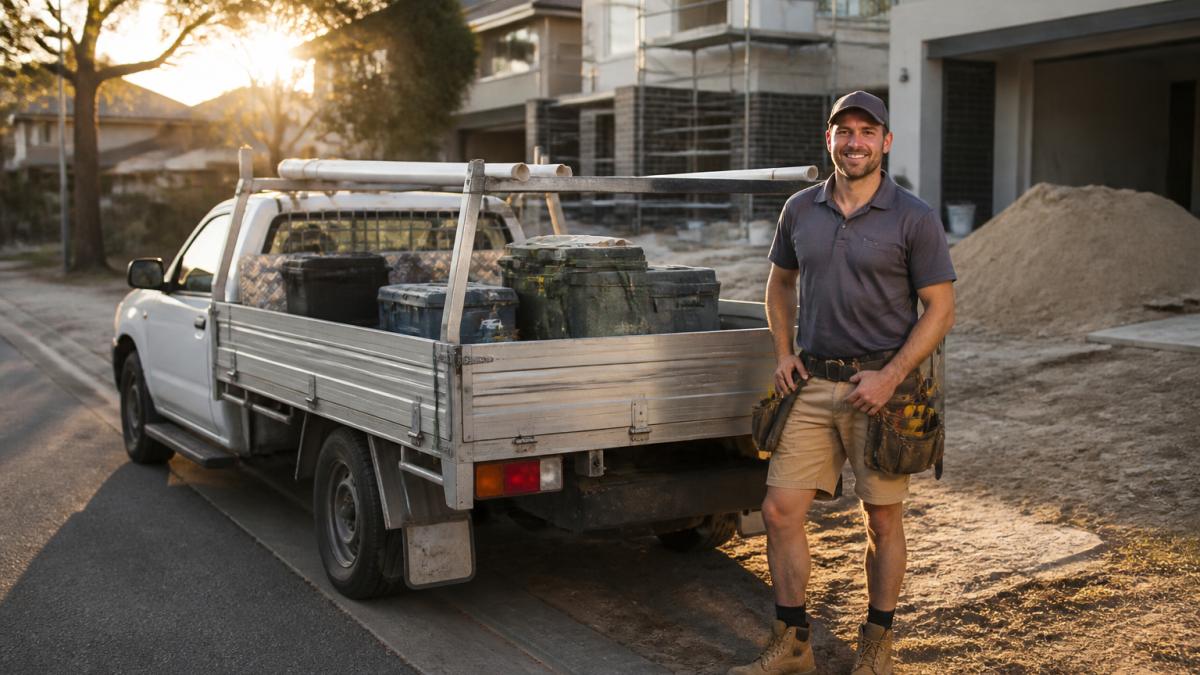
A work ute with signage and a tray full of tools is the classic tradie deal. Vans suit service businesses carrying stock. Light trucks and tippers move into commercial lending territory, where lenders look harder at the vehicle’s revenue-generating role.
Private-sale purchases need a little more care. Get an independent inspection, confirm the payout figure if finance is still owing, and check the Personal Property Securities Register before handing over money.
Costs, Tax and GST: Worked Repayment Examples
Every asset finance quote has four moving parts: the amount financed, the interest rate, the term and the fees. Rates vary by lender, asset type and your credit profile, so treat any figure as indicative rather than fixed.
Here is a worked comparison. Take a $45,000 ute with a $5,000 deposit, so $40,000 financed. Assume an indicative rate range of 7% to 11% per annum depending on credit and ABN history, a five-year term, and a $10,000 balloon at the end:
| Scenario | Rate (indicative) | Monthly Repayment | Total Interest | Balloon |
|---|---|---|---|---|
| Strong credit, new vehicle, no balloon | 7.0% | ~$792 | ~$7,520 | $0 |
| Strong credit, new vehicle, $10,000 balloon | 7.0% | ~$634 | ~$8,040 | $10,000 |
| Short ABN, used vehicle, $10,000 balloon | 11.0% | ~$716 | ~$12,960 | $10,000 |
| Larger deposit ($10,000), shorter 3-year term | 7.0% | ~$926 | ~$3,336 | $0 |
These figures are illustrative only and exclude establishment fees (commonly $250 to $1,000), monthly account fees (often $10 to $25), and any broker fee.
The pattern matters more than the exact numbers. A balloon lowers your monthly repayment but increases total interest and leaves a lump sum owing at the end, you need a plan to pay it, refinance it, or sell the asset.
On tax, the GST treatment depends on the structure and your GST registration status.
Ask every lender for the comparison rate and a full amortisation schedule showing the balloon. A quote that only shows the monthly repayment hides the total cost.
Application Checklist and Common Decline Reasons
Approval usually comes down to preparation. The tradies who get declined are rarely bad operators; they are usually applicants who handed over incomplete paperwork or applied to the wrong lender.
Work through this before you apply:
- Confirm your ABN is active and correctly registered
- Pull three to six months of business bank statements
- Gather recent BAS lodgements or an accountant’s letter
- Check your credit file for defaults or errors
- Identify the exact asset, price and seller
- Work out your deposit or trade-in equity
- Confirm the structure with your accountant
- Have ID and proof of address ready
Common decline reasons:
- Mismatched bank statements and tax returns. Lenders see this constantly with cash-heavy trades. Low doc pathways exist for exactly this reason.
- Applying to the wrong lender. A major bank’s credit policy may simply not accommodate a short ABN. A broker who knows the market places the deal where it fits.
- No deposit and a used asset. Thin equity plus an older asset is a hard combination.
- Unresolved defaults. Small defaults can sometimes be explained; ignoring them never works.
Applying to multiple lenders in quick succession leaves multiple credit enquiries on your file. Each one can count against you. Use one well-matched application rather than a scattergun approach.
Frequently Asked Questions
What are the requirements to qualify for asset finance as a self employed tradie?
Lenders typically want a valid ABN, a deposit or trade-in, and evidence you can service the repayments. Full-doc applicants supply tax returns and financial statements; low-doc applicants can often use bank statements, BAS lodgements or an accountant’s declaration instead. Asset finance eligibility requirements vary by lender, so a broker who knows self-employed scenarios can match you to one whose criteria fit your ABN age and income pattern.
Can self-employed tradies get low doc asset finance?
Yes. Low doc asset finance is built for borrowers whose tax returns understate their real cash flow, often because of deductions or irregular invoicing. Lenders assess bank statements, BAS activity and the asset itself rather than demanding two years of full financials. Some accept an ABN of 12 months or less. Rates are usually a little higher than full-doc, so compare the total cost over the loan term, not just the headline rate.
What documents do tradies need to apply for equipment finance?
Expect to provide identification, your ABN, and a quote or invoice for the equipment. Full-doc applications add recent tax returns and financial statements. Low-doc applications usually need three to six months of bank statements and sometimes BAS lodgements. If you are buying from a private seller, the lender may also ask for a valuation or inspection report. Having these ready before you apply speeds up approval considerably.
Can I use asset finance to buy a work vehicle or tools?
Yes. Asset finance covers utes, vans, trucks, trailers, excavators, and tools or machinery used for work. The asset acts as security, which is why rates are often lower than unsecured business loans. You can also finance used vehicles and equipment from private sales, subject to lender age and valuation limits. Speak to a broker about which structure suits the asset’s expected working life.
How long does asset finance approval take?
Approval timelines vary by lender and document type. Straightforward low-doc applications with complete bank statements can move quickly, while full-doc deals or private-sale purchases take longer because of verification and valuation steps. If you need funds within a set window, tell your broker upfront so they can prioritise lenders with faster turnaround and avoid ones that will stall on paperwork.
Is asset finance better than a standard business loan?
It depends on what you are buying. Asset finance is usually cheaper than an unsecured business loan because the asset secures the debt, and it preserves working capital for day-to-day cash flow. A standard business loan suits expenses without a clear asset attached. For a ute, excavator or kitchen fit-out, asset finance is often the more practical structure, but compare total repayments and fees before deciding.
The gap between a declined application and an approved one is usually structure and documentation, not your business. If you are a sole trader or ABN holder who has been knocked back, Outlook Finance works through low doc options from one year of ABN, equity release without tax returns, and asset finance placements matched to your actual cash flow. Get started with Outlook Finance and put the funding behind the ute, the tools or the machinery your work depends on.
Related Services
Book a free 15-minute discovery call with Atish Prasad — Outlook Finance. No obligation, just straight answers about your borrowing options.
📅 Book a Discovery CallOr call us on 1300 432 961 | WhatsApp 0481 712 907